Bachelor of Science in Nursing(B.Sc Nursing)
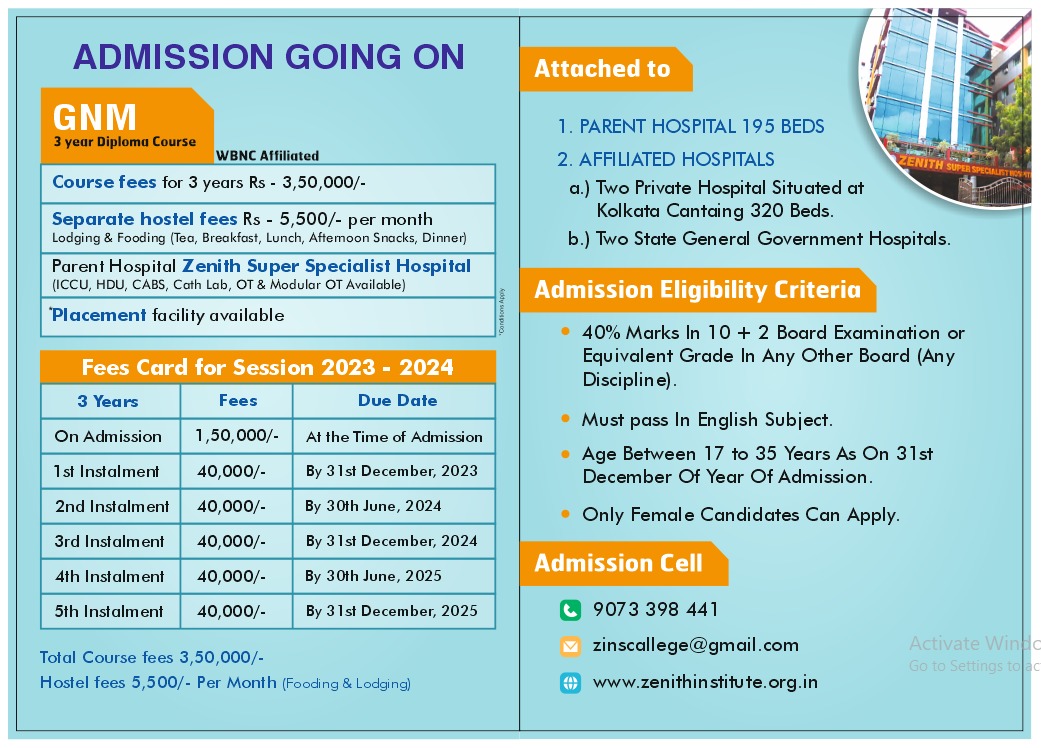
GNM is a three-year diploma course in India that prepares students for work as nurses in both hospital and community settings.Undoubtedly, if a person wants to make a magnificent career in the sphere of the healthcare industry, then B.sc Nursing course is better than General Nursing and Midwifery (GNM). In the matter of career growth, higher studies, and salary the value of B.sc Nursing is more than General Nursing and Midwifery (GNM) course.
Admission Eligibility Criteria for B.Sc Nursing
- Only Female candidates can apply.
- Must be a citizen of India and permanent resident of West Bengal for at least 10 years as of 31.12.2022
- Age must be at least 17 years old.
- Educational Qualification:
o Passed 10+2 from any recognized board with minimum 45% aggregate marks.
o Must have passed English in 10+2
o Candidates from vocational stream must be from Health Care Science discipline.
- Language Proficiency: Must be able to read, write, and express in Bengali and/or Nepali.
- Medical Fitness: Must be medically fit and submit a Medical Fitness Certificate during admission.
Career Oppurtunities
The Bachelor of Science in Nursing (B.Sc Nursing) course opens up a wide range of career opportunities for graduates. Here are some of the career options available to B.Sc Nursing graduates:
1.Registered Nurse: B.Sc Nursing graduates can work as registered nurses in hospitals, clinics, nursing homes, and other healthcare settings. They are responsible for providing care to patients, administering medications, monitoring vital signs, and coordinating with other healthcare professionals.
2.Nurse Educator: B.Sc Nursing graduates can work as nurse educators in nursing schools, colleges, and universities. They are responsible for developing and delivering nursing curriculum, conducting research, and training nursing students.
3.Nurse Administrator: B.Sc Nursing graduates can work as nurse administrators, overseeing the day-to-day operations of healthcare facilities, managing budgets, supervising staff, and ensuring compliance with healthcare regulations.
Nurse Practitioner: B.Sc Nursing graduates can become nurse practitioners, who are advanced practice registered nurses (APRNs) with additional training in diagnosing and treating illnesses. They can prescribe medications, order diagnostic tests, and provide primary care services to patients.
Nurse Researcher: B.Sc Nursing graduates can work as nurse researchers, conducting research studies to advance the nursing profession and improve patient care. They may work in academic institutions, healthcare organizations, or research institutions.
Public Health Nurse: B.Sc Nursing graduates can work as public health nurses, promoting healthy lifestyles and disease prevention within communities. They may work for government agencies, non-profit organizations, or healthcare facilities.
Home Health Nurse: B.Sc Nursing graduates can work as home health nurses, providing healthcare services to patients in their homes. They may work for healthcare agencies or private practices.
These are just some of the career opportunities available to B.Sc Nursing graduates. The demand for nurses is high, and there are numerous job opportunities available in a variety of healthcare settings